
General Contracting & Construction in Seawall
Local Marine Contractor Expertise
Along Galveston's historic waterfront, marine contractor services protect shorelines and enhance waterfront access for homes and businesses. Specialized marine contractors in Seawall handle seawall construction, dock installation, boat lifts, and dredging—critical work on the Texas Gulf Coast.
How Marine Contractors Work
A structured approach from planning through final inspection ensures lasting, compliant waterfront structures.
Site Assessment
Evaluate soil composition, water depth, tide patterns, and access routes. Inspect existing structures for damage or deterioration.
Design & Permitting
Create structural plans using durable materials suited to Galveston's coastal climate. Secure necessary local and state permits before construction begins.
Material Preparation
Order vinyl sheet piling, concrete, marine-treated timber, and galvanized fasteners. Inspect all materials for quality and durability standards.
Construction
Drive pilings, install tie-back systems, pour concrete, and assemble dock or deck components. Maintain safety protocols throughout all phases.
Inspection & Testing
Verify structural alignment, material integrity, and code compliance. Address any punch-list items before project closeout.
Handoff & Maintenance
Provide documentation and maintenance guidance. Offer repair and service schedules to extend structure lifespan in saltwater environments.
You'll know each step ahead of time and stay informed throughout execution.
Our Marine Services
Seawall Construction & Repair
New seawall builds protect your property from storm surge and daily wave action. Repairs address cracks, settling, and erosion. Materials include vinyl sheet piling, reinforced concrete, and aluminum tie-back systems built to survive Gulf Coast hurricanes and salt spray.
Galveston waterfront properties face rising sea levels and frequent storms—a robust seawall is essential protection.
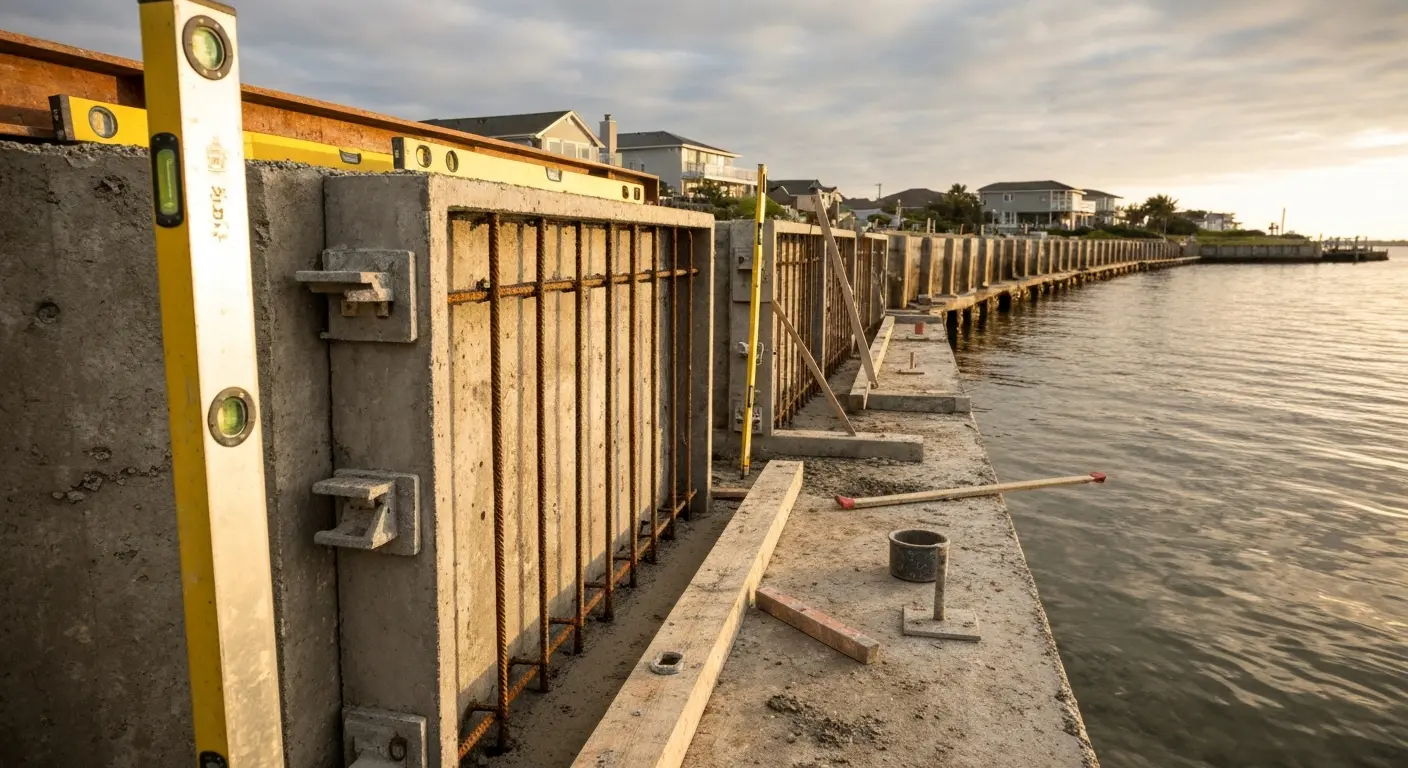
Reinforced concrete seawall installation protecting Seawall-area properties.
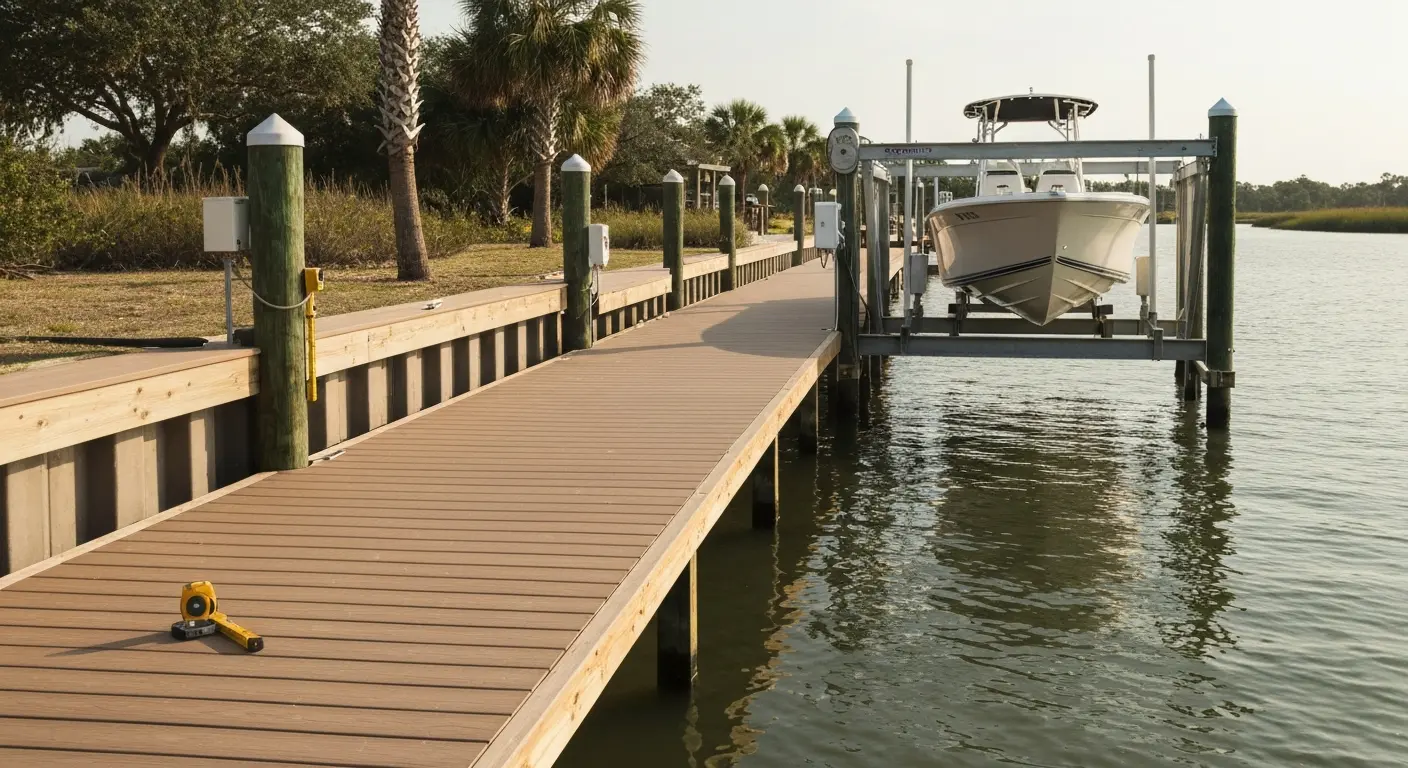
Custom dock with boat lift installation along Seawall Boulevard waterfront.
Dock & Boat Lift Installation
Custom docks with floating or stationary design accommodate your watercraft and match your home's style. Boat lifts range from 1,000 to 60,000 pounds capacity. Both use marine-treated materials and stainless hardware to withstand saltwater exposure.
Babe's Beach and east-end neighborhoods rely on quality dock work for boating access and property convenience.
Dredging & Channel Deepening
Keep your slip or mooring accessible at low tide with dredging services. Remove sand and sediment buildup to maintain water depth. Particularly important for Galveston's tidal zones where seasonal changes affect navigation.
West-end neighborhoods and bay-access properties benefit most from periodic maintenance dredging.
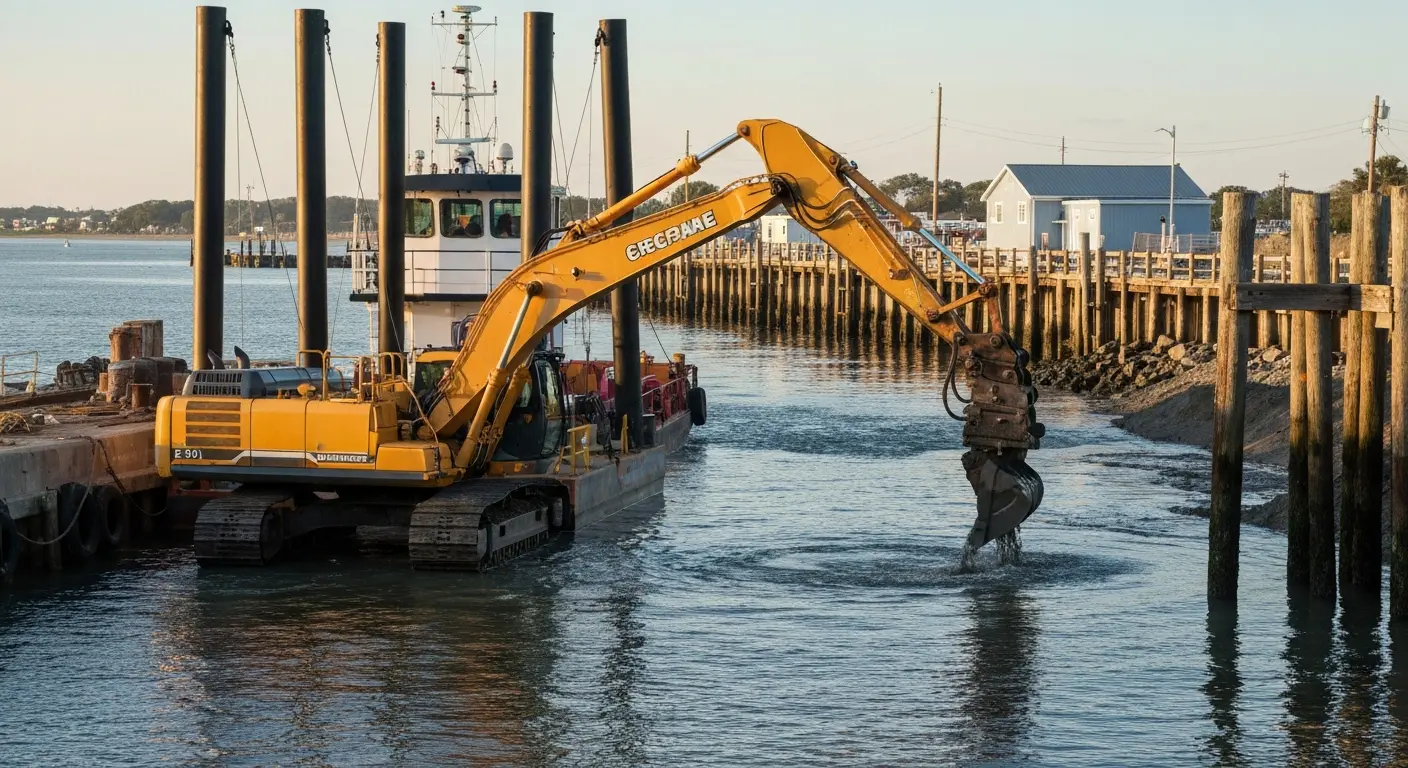
Channel dredging maintaining waterfront access near Seawall.
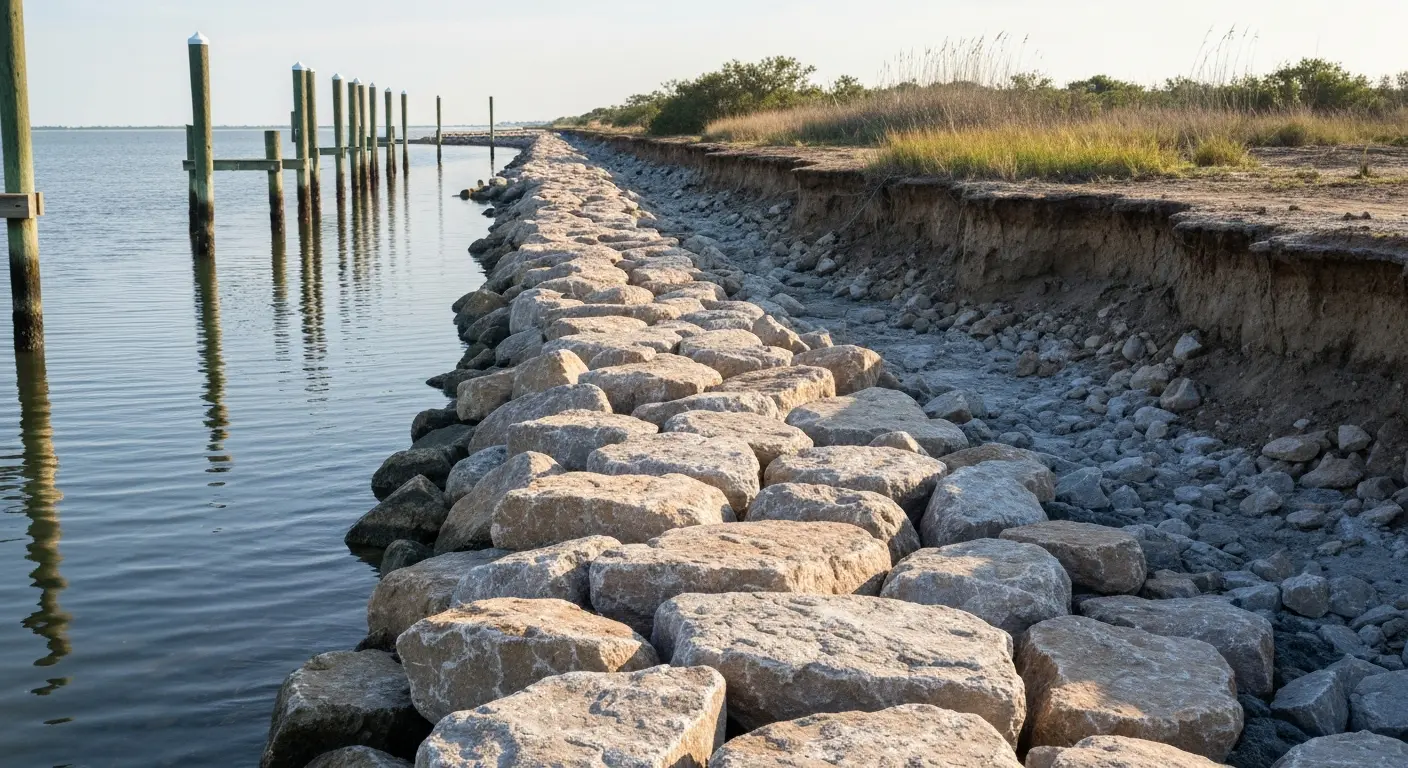
Rock revetment (rip rap) erosion control on Galveston waterfront.
Rock Revetments & Rip Rap
Place durable stone barriers to prevent erosion and wave damage. Rock revetments work alongside seawalls to absorb wave energy. Ideal for areas where sand loss threatens property lines or access routes.
Campeche Cove and other west-side locations use this method to maintain shoreline stability.
Why Marine Expertise Matters in Seawall
Galveston's waterfront demands specialized knowledge and proven materials.
Saltwater Durability
Marine-treated lumber, galvanized fasteners, and vinyl sheet piling resist rust and corrosion for decades in Galveston's Gulf environment.
Hurricane Resilience
Structures engineered for storm surge, high winds, and wave overtopping protect your property and neighbors during severe weather events.
Permit Navigation
Experienced contractors know Galveston and Texas permitting, environmental rules, and coastal zone regulations—avoiding costly delays and rework.
Tide & Water Knowledge
Understanding Galveston Bay's tides, seasonal shoaling, and current patterns ensures structures function properly year-round.
Property Value Protection
Quality marine construction prevents erosion damage, maintains beachfront appeal, and preserves waterfront property values.
Long-Term Savings
Proper construction reduces future repairs and maintenance costs. Avoiding cheap methods prevents expensive failures during storms.
Seawall has been protected by a historic seawall since 1904. Modern marine contractors honor that legacy by building structures that endure for decades.
Serving Seawall & Galveston Waterfront
Marine contractor work spans the entire Galveston Seawall area and surrounding coastal neighborhoods.
Neighborhoods & Areas
Marine contractors serve Seawall Boulevard from its western end near Campeche Cove through Babe's Beach, the Convention Center area, Fort Crockett, and east to Stewart Beach. Each neighborhood has distinct waterfront needs—high-rise condos near the Pleasure Pier require different solutions than residential homes on quieter stretches.
- Campeche Cove: West-end serenity with Gulf views and coastal protection needs.
- Babe's Beach: Mixed residential and commercial with direct beach access.
- Convention Center Area: High-rise condos and resort properties along Seawall Boulevard.
- Fort Crockett: Historic neighborhood with established waterfront infrastructure.
- East End Beach: Family-friendly beaches and quieter residential waterfront.
Getting Here & Contact
Seawall Boulevard runs east-west along the entire waterfront. Most marine contractor projects are located directly on or within view of Seawall Boulevard. Convenient parking is available throughout the district—both free spots near several street blocks and paid metered parking for daily visits.
To schedule a waterfront assessment or discuss your seawall, dock, or dredging needs, reach out directly. Contractors typically offer free site inspections to understand soil conditions, water access, and existing structures before providing recommendations.
Featured Question: What Makes a Seawall Last?
A seawall's lifespan depends on material quality, proper installation, and maintenance. Marine-treated wood lasts 20–40 years; vinyl sheet piling 40+ years; concrete, when sealed and reinforced, 50+ years. Galveston's historic seawall, completed in 1904, proves that solid engineering and durable materials survive over a century of Gulf Coast conditions.
- Use galvanized or stainless fasteners to prevent rust in saltwater.
- Seal concrete annually to prevent water infiltration and freeze-thaw damage.
- Inspect for cracks, bulging, or leaning every 2–3 years.
- Address erosion at the wall base with rock revetment or dredging.
- Keep drainage clear to prevent water backup and structural pressure.
Invest in quality construction today to avoid costly repairs and flooding later.
Frequently Asked Questions
What permits are required for seawall work in Seawall?
Seawall construction requires permits from Galveston County, the Texas Commission on Environmental Quality (TCEQ), and often the U.S. Army Corps of Engineers if work affects navigable waters or wetlands. Licensed marine contractors handle permit applications and compliance.
How often should docks be inspected?
Inspect pilings, decking, and hardware annually for rust, rot, or damage. After storms, check for loose fasteners, cracks, or settling that might affect safety and function.
Can I repair my seawall myself?
Minor sealing or caulking is okay; structural repairs, piling replacement, or large cracks require licensed contractors. Water pressure and soil movement can fail DIY fixes quickly, risking safety and property damage.
What causes seawalls to fail?
Corrosion, poor drainage, wave erosion at the base, soil settlement, and storm overtopping are common causes. Lack of maintenance allows small problems to become expensive failures.
Are rock revetments better than concrete seawalls?
Both serve different purposes. Rock revetments absorb wave energy and allow drainage; concrete seawalls offer solid barriers. Many properties use both—rock at the base, concrete wall above—for maximum durability and function.
How can I protect my waterfront during hurricane season?
Ensure your seawall is in good condition, secure docks and lifts, clear debris from structures, and maintain proper drainage. Have a contractor inspect after storms and address damage promptly to prevent further degradation.
DISCOVER WHAT OUR CUSTOMERS HAVE TO SAY ABOUT US
REVIEWS
proudly serving these areas
Volusia County
Seminole County
Brevard County
Flagler County
Central Florida
Orange County
Osceola County
Marion County
READY TO take the next step?
get a free quote TODAY!
QUICK LINKS
our services
service areas
operating HOURS
Mon: 7:00 am - 5:00 pm
Tue: 7:00 am - 5:00 pm
Wed: 7:00 am - 5:00 pm
Thu: 7:00 am - 5:00 pm
Fri: 7:00 am - 5:00 pm
Sat: Closed - Closed
Sun: Closed - Closed